
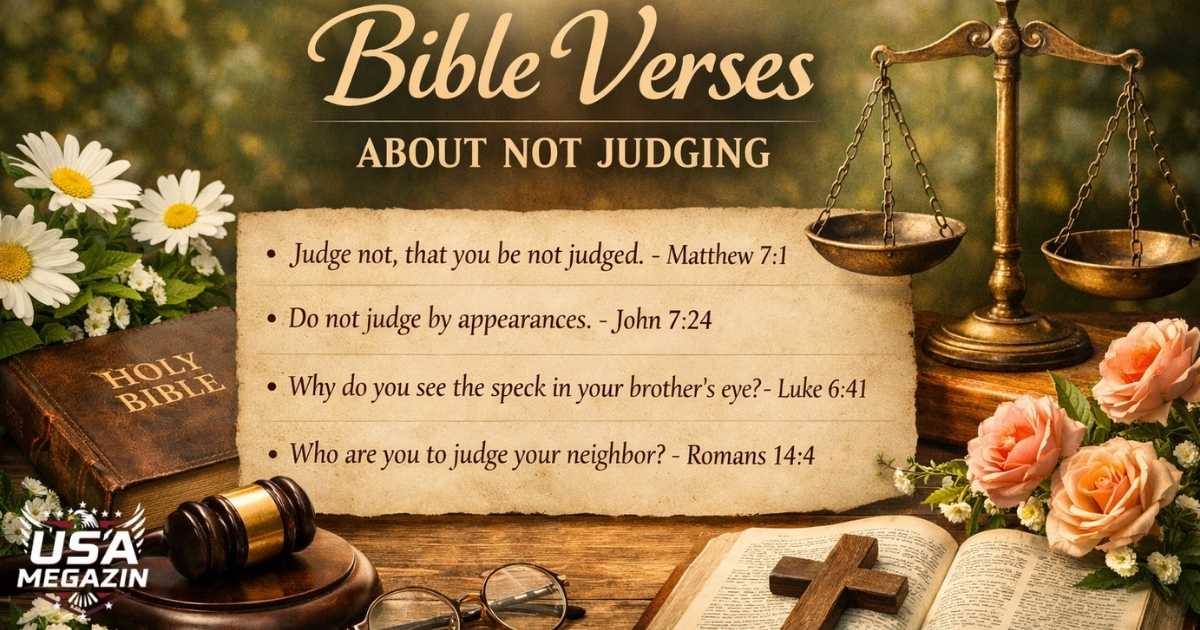

One of the most misunderstood teachings in Scripture is what the Bible says about not judging others. Many believers struggle with the balance between discernment and condemnation. Understanding bible verses about not judging helps Christians walk in humility, grace, and godly wisdom.
God’s Word is clear judgment belongs to Him alone. When we rush to condemn others, we often forget our own need for mercy. These KJV verses will guide your heart toward love, compassion, and righteous living.
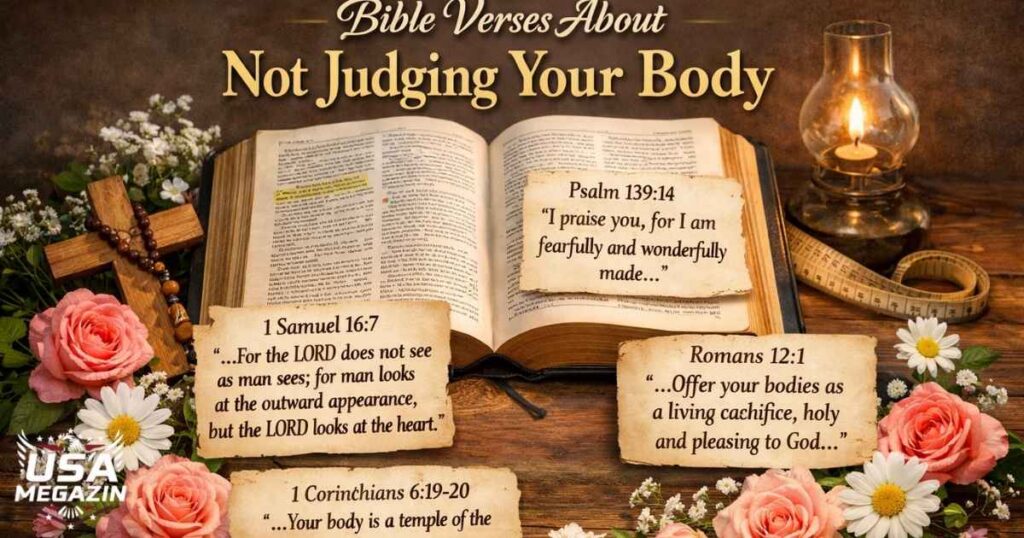
bible verses about not judging Your Body
Matthew 7:1–2 Do Not Judge
“Judge not, that ye be not judged. For with what judgment ye judge, ye shall be judged: and with what measure ye mete, it shall be measured to you again.”
This is perhaps the most well-known verse about not judging others. Jesus reminds us that the standard we apply to others will be applied to us. Before pointing a finger at someone else’s failures, we must examine our own hearts first.
Judgment is a mirror. Whatever measure you use toward others, God will use that same measure toward you. This is both a warning and a call to extend the same grace you desire for yourself.
Luke 6:37 Forgive and You Will Be Forgiven
“Judge not, and ye shall not be judged: condemn not, and ye shall not be condemned: forgive, and ye shall be forgiven.”
Jesus pairs not judging with forgiveness. The two are inseparable in the Christian life. When we release judgment, we open the door to receiving God’s forgiveness more fully in our own lives.
This verse gives us a practical command stop condemning, start forgiving. It is not a suggestion but a direct call from the Lord Jesus Christ to walk in mercy every single day.
Romans 2:1 You Who Judge Do the Same Things
“Therefore thou art inexcusable, O man, whosoever thou art that judgest: for wherein thou judgest another, thou condemnest thyself; for thou that judgest doest the same things.”
Paul confronts a very human tendency judging others for the very sins we ourselves commit. This verse is a sobering reminder that hypocrisy is never hidden from God, even when it is hidden from others.
The word inexcusable is strong. God leaves no room for self-righteousness. We are all in need of His grace, and recognizing that truth keeps us from sitting in judgment over our brothers and sisters.
James 4:11–12 There Is One Lawgiver
“Speak not evil one of another, brethren. He that speaketh evil of his brother, and judgeth his brother, speaketh evil of the law, and judgeth the law: but if thou judge the law, thou art not a doer of the law, but a judge. There is one lawgiver, who is able to save and to destroy: who art thou that judgest another?”
James reminds us that when we judge our brother, we are stepping into a role that belongs only to God. There is only one Lawgiver, one Judge, one who has the authority to condemn or to save.
“Who art thou that judgest another?” This question should echo in every believer’s heart. We are not the standard God’s Word is. Our place is obedience, not condemnation.
John 8:7 He That Is Without Sin
“So when they continued asking him, he lifted up himself, and said unto them, He that is without sin among you, let him first cast a stone at her.”
Jesus spoke these words to those who were ready to condemn a woman caught in sin. His response silenced every accuser. Not one person could claim the moral perfection required to execute that judgment.
This verse does not excuse sin. It exposes pride. No human being stands in a position of sinless perfection that qualifies them to cast the final stone of condemnation on another soul.
Romans 14:10–13 We Shall All Stand Before God
“But why dost thou judge thy brother? or why dost thou set at nought thy brother? for we shall all stand before the judgment seat of Christ. For it is written, As I live, saith the Lord, every knee shall bow to me, and every tongue shall confess to God. So then every one of us shall give account of himself to God. Let us not therefore judge one another any more: but judge this rather, that no man put a stumblingblock or an occasion to fall in his brother’s way.”
Paul shifts the focus from judging others to examining ourselves. One day, every believer will stand before the judgment seat of Christ not to answer for someone else’s choices, but for their own.
Instead of judging, Paul calls us to focus on not becoming a stumbling block. Our energy is better spent building others up than tearing them down with harsh criticism and condemnation.
1 Corinthians 4:5 Wait Upon the Lord
“Therefore judge nothing before the time, until the Lord come, who both will bring to light the hidden things of darkness, and will make manifest the counsels of the hearts: and then shall every man have praise of God.”
God sees what no human eye can see the hidden motives, the secret struggles, the quiet repentance. We judge only what is visible. He judges the whole truth.
This verse calls us to patience. Final judgment is not our responsibility. God will bring all things to light in His perfect time. Our role is to trust Him with outcomes we cannot fully understand.
Proverbs 31:9 Judge Righteously
Learn more:My Life Is In God’s Hands Bible Verses KJV
“Open thy mouth, judge righteously, and plead the cause of the poor and needy.”
Scripture does distinguish between sinful condemnation and righteous discernment. Proverbs calls us to speak up for justice, especially for the vulnerable. Not all judgment is forbidden condemning a person’s soul is.
Righteous judgment defends the weak and upholds truth. It is not motivated by pride or self-righteousness but by love for God’s law and compassion for people who are suffering.
Matthew 7:5 Remove the Beam First
“Thou hypocrite, first cast out the beam out of thine own eye; and then shalt thou see clearly to cast out the mote out of thy brother’s eye.”
Jesus uses a vivid picture here. A beam in your own eye will always distort your view of someone else’s small speck. Self-examination must always come before correction of others.
This does not mean we ignore sin in others. It means we approach correction with humility, having first dealt honestly with our own failures before God. Accountability starts with self-awareness.
Galatians 6:1 Restore in a Spirit of Meekness
“Brethren, if a man be overtaken in a fault, ye which are spiritual, restore such an one in the spirit of meekness; considering thyself, lest thou also be tempted.”
When a brother or sister falls into sin, the godly response is not judgment it is gentle restoration. Paul uses the word meekness, which reflects a soft, humble spirit rather than a harsh, condemning one.
The warning at the end is striking lest thou also be tempted. Pride in our own standing before God blinds us to our own vulnerability. Humility protects us even as we help others.
Final Words
Understanding bible verses about not judging is not about ignoring sin or abandoning truth. It is about trusting God as the ultimate Judge while walking in love, humility, and grace toward every person He places in our lives.
As believers, our calling is clear to reflect the mercy we have freely received from God. When we stop judging and start loving, we become the light and salt this broken world desperately needs every single day.