

If you’ve ever wondered what does bomboclat mean, you’re not alone. This word has spread across social media, memes, and everyday conversation. But as believers, we must examine every word through the lens of Scripture.
The Bible has much to say about the words we speak. Proverbs 18:21 reminds us, “The tongue has the power of life and death.” Understanding a word’s meaning helps us make wise, Spirit-led choices about our speech.
“Bomboclat” Meaning & Usage
“Bomboclat” is a Jamaican Patois expression that has found its way into global internet culture. Before using it casually, it is worth understanding both its roots and its weight.
As Christians, we are called to be mindful of the language we adopt. Ephesians 4:29 says, “Do not let any unwholesome talk come out of your mouths, but only what is helpful for building others up.”
Original Meaning (in Jamaican Patois)
The word “bomboclat” originated in Jamaica, literally meaning “butt cloth,” a crude reference to menstrual or toilet rags. In Jamaican culture, it carries the same force and offense as major English profanities.
It is used to express intense anger, shock, or frustration. In its homeland, it is considered highly vulgar and disrespectful, particularly among older generations and women.
From a biblical standpoint, this kind of language falls under what Colossians 3:8 calls us to put away: “But now you must also rid yourselves of all such things as these: anger, rage, malice, slander, and filthy language from your lips.”
Modern Internet / Meme Usage
In the late 2010s, “bomboclat” went viral on Twitter and TikTok. It was repurposed as a humorous meme caption essentially meaning “caption this” stripping away its original vulgarity in playful online contexts.
While the intent online is often lighthearted, Christians should still pause before repeating words with dark origins. 1 Thessalonians 5:22 instructs us to “reject every kind of evil.” Even watered-down versions of harmful words can desensitize our hearts over time.
Important Note
Even though “bomboclat” is used humorously online, it remains deeply offensive in authentic Jamaican and Caribbean settings. What feels like a joke online can cause real hurt to those who know its full meaning.
Proverbs 12:18 warns us, “The words of the reckless pierce like swords, but the tongue of the wise brings healing.” As believers, we are called to bring healing, not unintentional offense.
Summary
Here is a quick overview of how this word functions in different contexts:
| Context | Meaning | Tone |
| Traditional Jamaican | A strong curse word | Offensive / Vulgar |
| Online Meme Culture | A “caption this” prompt | Playful / Humorous |
| Biblical Perspective | Unwholesome speech | To be avoided |
As this table shows, context shapes meaning but as Matthew 12:36 reminds us, “Everyone will have to give account on the day of judgment for every empty word they have spoken.”
What Does “Bomboclat” Mean?
Learn more:Good Morning Prayer for My Love: 120+ Heartfelt Messages to Bless Your Partner
So, what does bomboclat mean at its core? It can function as a shocked exclamation, a sharp insult, or a general-purpose swear word depending on the situation. Its flexibility in speech does not, however, make it neutral.
Every word we choose reflects the condition of our hearts. Luke 6:45 teaches, “A good man brings good things out of the good stored up in his heart… For the mouth speaks what the heart is full of.” Our vocabulary reveals our inner world.
When & How to Use “Bomboclat”
Many people use “bomboclat” when overwhelmed by strong emotions surprise, anger, or disbelief. Online, it serves as a funny meme starter. In Caribbean communities, it functions as a fierce insult or expletive.
But the more important question for believers is not how to use it it is whether to use it. James 3:10 poses a powerful challenge: “Out of the same mouth come praise and cursing. My brothers and sisters, this should not be.”
Rather than reaching for words rooted in vulgarity, we can train our tongues toward grace. Colossians 4:6 encourages us, “Let your conversation be always full of grace, seasoned with salt, so that you may know how to answer everyone.”
Origin & Spread of “Bomboclat”
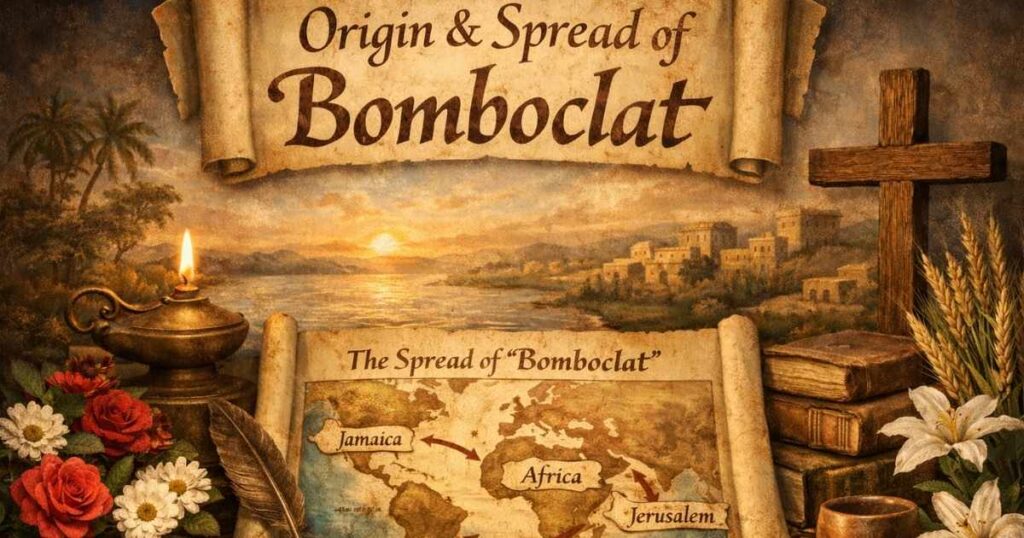
“Bomboclat” was born centuries ago in Jamaica, where African slaves created Patois by blending English, African dialects, and Creole. The word originally referenced something considered unclean and shameful, which is how it became a taboo expression.
By the 1980s, Jamaican immigrants brought it to American streets, and by the 2010s, social media carried it worldwide. The spread of this word is a reminder of how quickly language travels and how quickly believers can absorb the culture around them without realizing it.
Romans 12:2 cautions us, “Do not conform to the pattern of this world, but be transformed by the renewing of your mind.” As language evolves around us, our standard must remain God’s Word, not trending phrases.
Is It Inappropriate to Say “Bomboclat?”
Yes, in many contexts it absolutely is. In Jamaican and Caribbean culture, it is considered vulgar and deeply disrespectful. In formal settings workplaces, schools, and churches it is entirely out of place.
Some women find it particularly offensive because of its connection to menstruation, carrying an undertone of disrespect toward the female body. As believers who honor the bodies God created, this is worth taking seriously.
Proverbs 21:23 offers straightforward wisdom: “Those who guard their mouths and their tongues keep themselves from calamity.” Guarding our speech is not just polite it is spiritually protective.
Terms Related to “Bomboclat”
Several slang terms carry a similar spirit to “bomboclat,” all of them rooted in vulgarity or offense:
- Bloodclaat Means “blood cloth,” a vulgar Jamaican insult implying filth and dirtiness
- Suck Yuh Mada An extremely offensive phrase directed at someone’s mother, almost guaranteed to provoke conflict
- Sco Pa Tu Manaa Originally from a Ghanaian song, used online as a meme prompt similar to “bomboclat”
Each of these terms reflects the tendency of human language to drift toward darkness when not anchored in truth. Psalm 19:14 remains the believer’s prayer: “May these words of my mouth and this meditation of my heart be pleasing in your sight, Lord, my Rock and my Redeemer.”
FAQ’S
What does bomboclat mean in simple terms?
Bomboclat is a Jamaican Patois curse word expressing shock or anger. It literally means “butt cloth” and carries the same weight as major English profanities.
Is bomboclat a bad word?
Yes, bomboclat is considered a strong profanity in Jamaican culture. While it is used humorously online, it remains deeply offensive and vulgar in real-life Caribbean conversations.
How did bomboclat become a popular meme?
Bomboclat went viral on Twitter and TikTok in the late 2010s. People began using it as a funny “caption this” prompt, giving it a playful, humorous online identity.
Should Christians use the word bomboclat?
The Bible calls believers to use wholesome, graceful speech. Ephesians 4:29 reminds us to avoid unwholesome talk, making bomboclat an unsuitable choice for Christian conversation.
Where did the word bomboclat originally come from?
Bomboclat originated centuries ago in Jamaica through Patois, a language blending English and African dialects. African slaves created it, and it eventually spread globally through immigration and social media.
Final Words
Understanding what does bomboclat mean helps believers make informed, Spirit-led choices about language. Words carry history, culture, and power that we must never take lightly as followers of Christ.
Let your speech always reflect the grace of God living inside you. Choose words that build, heal, and glorify Him, because every word you speak is an opportunity to honor the One who gave you voice.